Morphological and Diagnostic Approach to Nephrotic Syndromeby Boitsheko MyatazaSCDM3000A Renal at Wits covers the morphological and diagnostic approach to nephrotic syndrome through an interactive mind map, organizing key pathological features, clinical presentations, and diagnostic criteria for comprehensive study.June 2026Made about 1 month ago
Nephritic Syndrome: Diagnostic Approach and Pathological Patternsby Boitsheko MyatazaSCDM3000A Renal mind map at Wits covers nephritic syndrome's diagnostic approach and pathological patterns, helping students systematically work through clinical presentations and underlying pathology. Ideal for understanding the framework for identifying and classifying nephritic conditions.June 2026Made about 1 month ago
Glomerulonephritis and Haematuria: Diagnostic Approach and Pathological Differentialby Boitsheko MyatazaSCDM3000A Renal at Wits covers glomerulonephritis and haematuria diagnostic approaches with a mind map showing pathological differentials. This concept map organizes key diagnostic pathways and disease classifications for understanding kidney pathology.June 2026Made about 1 month ago
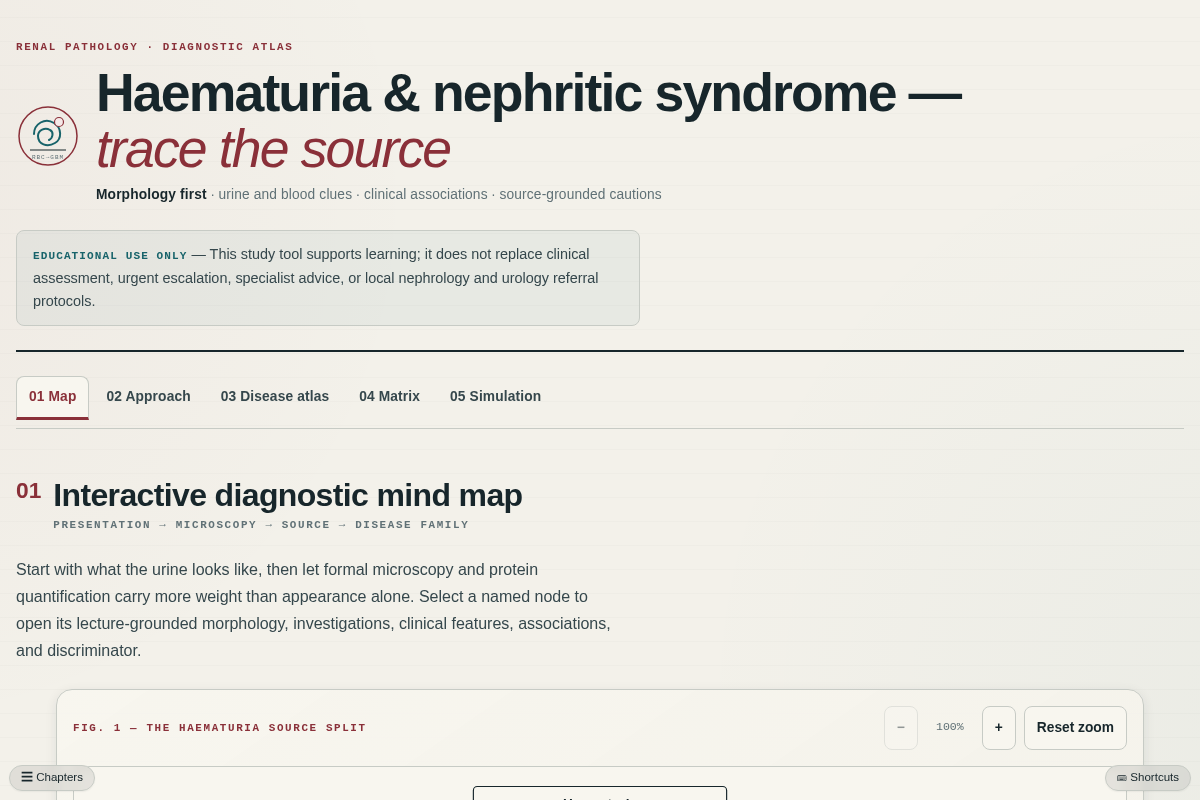
Haematuria & Nephritic Syndrome: Interactive Diagnostic Mind Mapby Boitsheko MyatazaSCDM3000A Renal at Wits features an interactive diagnostic mind map comparing haematuria and nephritic syndrome, guiding students through morphological features, lab findings, and clinical associations to differentiate between these conditions.June 2026Made about 1 month ago
02Why is the kidney physiologically vulnerable to drug toxicity despite its small size?
03How is drug-induced nephrotoxicity classified based on time of onset?
+17 more in the deck
Flashcards
Nephrotoxic Drugs: Mechanisms and Clinical Syndromesby Boitsheko MyatazaSCDM3000A Renal at Wits covers nephrotoxic drugs through flashcards examining mechanisms of drug-induced kidney injury, including acute interstitial nephritis, tubular toxicity from aminoglycosides and amphotericin B, crystal nephropathy, and electrolyte disturbances. The deck details clinical syndromes, risk factors, June 2026Made about 1 month ago
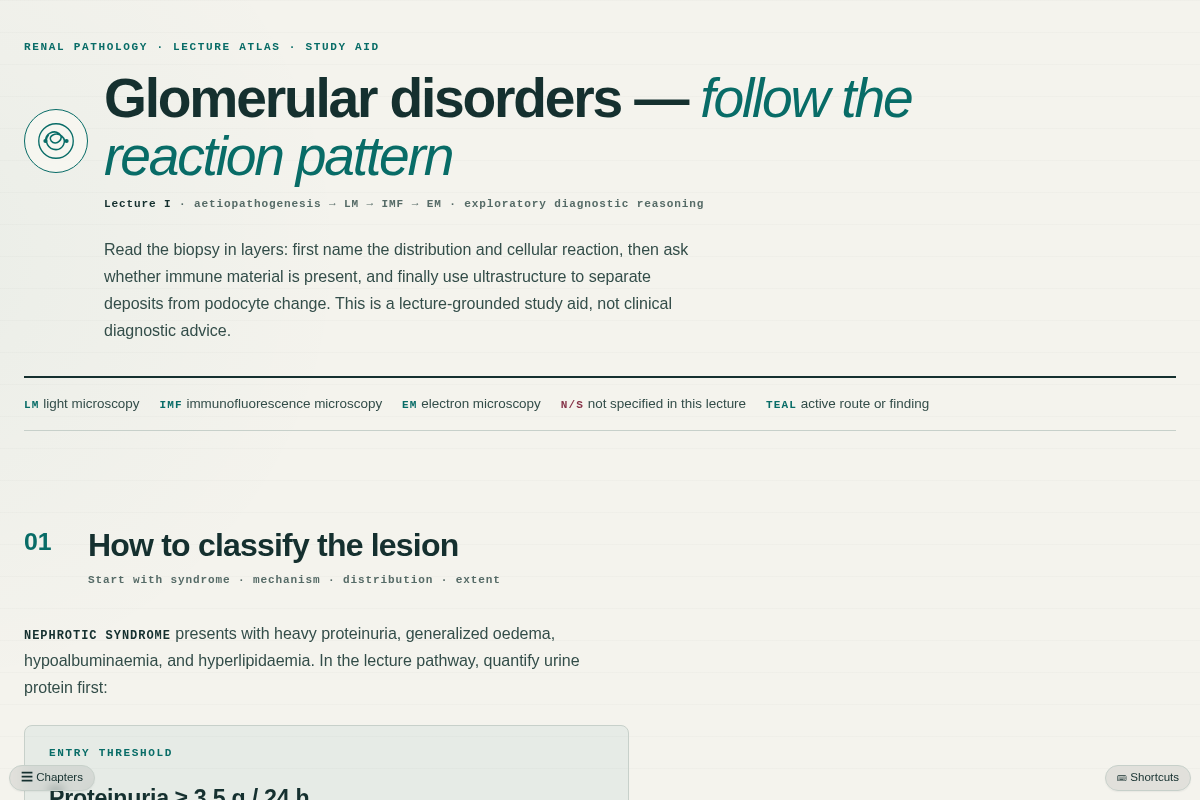
Glomerular Disorders: Interactive Diagnostic Mind Mapby Boitsheko MyatazaSCDM3000A Renal at Wits features an interactive diagnostic mind map organizing glomerular disorders by aetiopathogenesis and morphological patterns, with microscopy techniques (light, immunofluorescence, and electron) and clinical associations to help students differentiate conditions.June 2026Made about 1 month ago
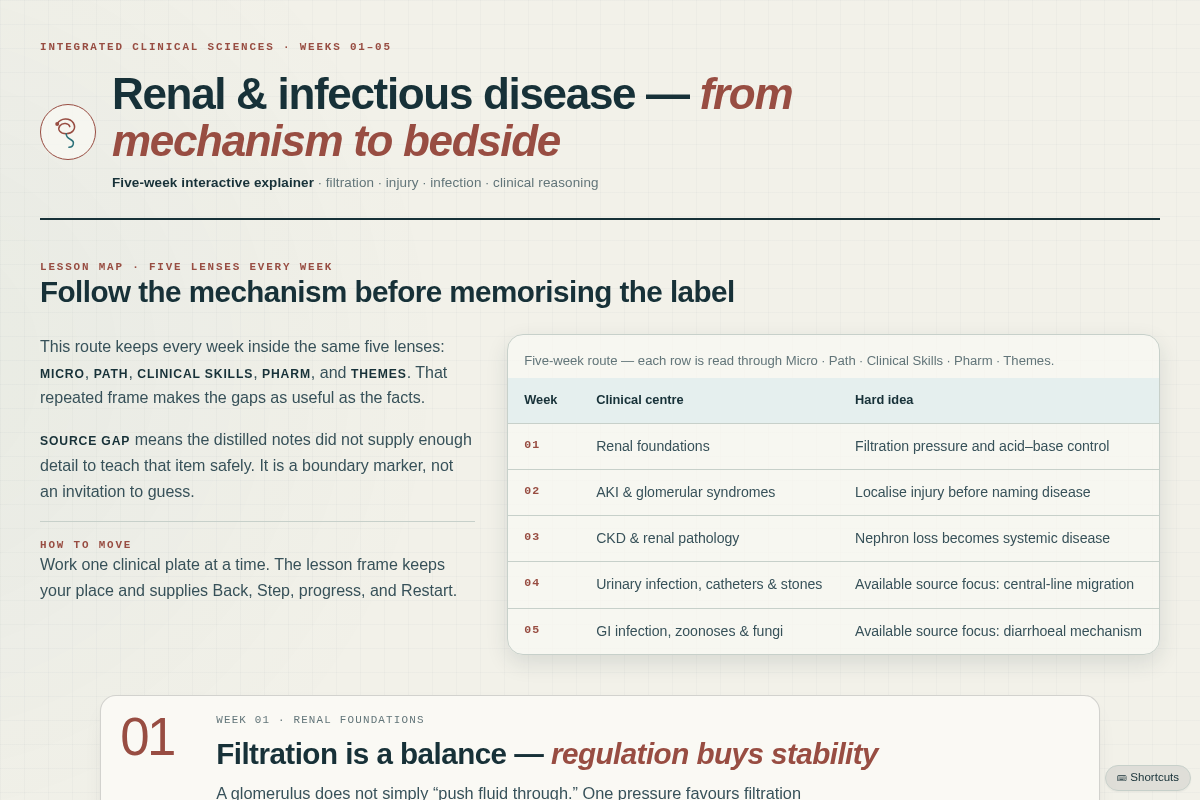
Five-Week Renal, Infectious Disease & Clinical Sciences Interactive Explainerby Boitsheko MyatazaSCDM3000A Renal at Wits covers five weeks of renal, infectious disease, and clinical sciences through an interactive explainer that guides students step-by-step through core concepts with plain-language intuitions, embedded visuals, and check-for-understanding questions organized by topic (microbiology, pathology, clinJune 2026Made about 1 month ago
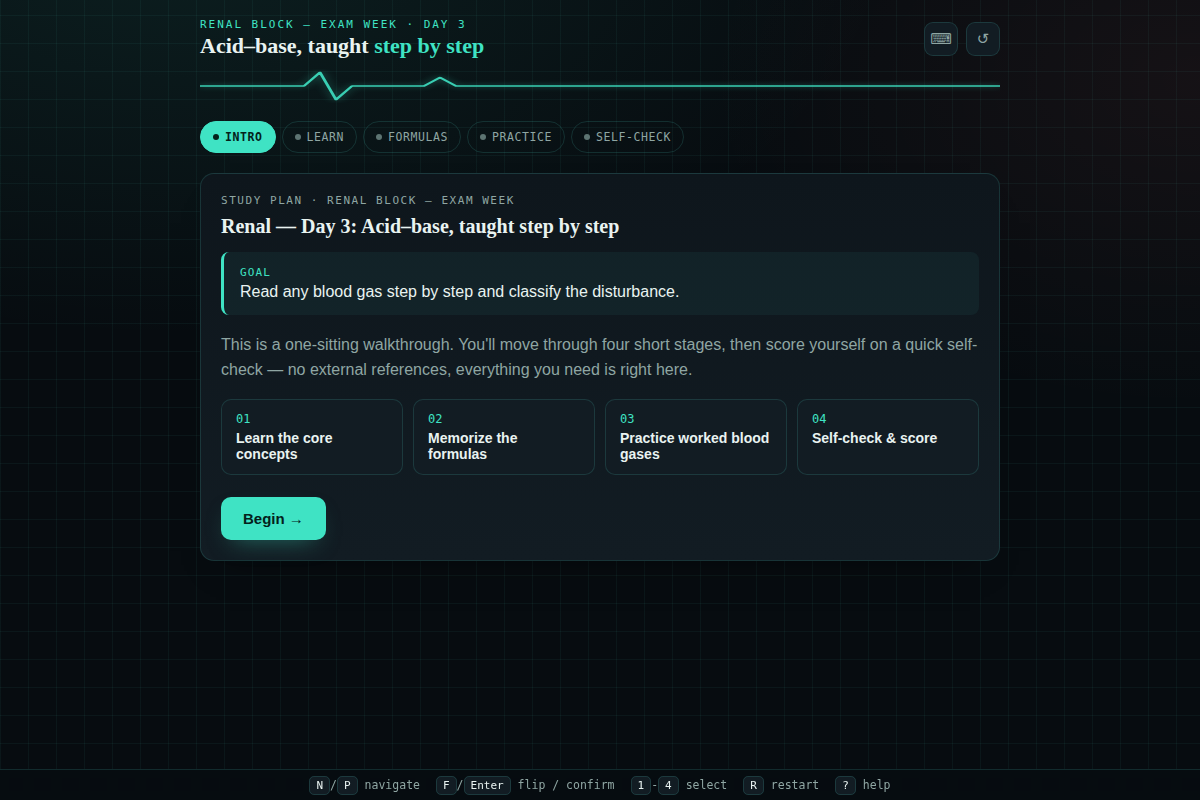
Renal — Day 3: Acid–base, taught step by stepby Boitsheko MyatazaSCDM3000A Renal at Wits covers acid-base interpretation through step-by-step teaching and practice drills based on lecture notes, guiding students through the systematic method needed to solve complex cases.June 2026Made 2 months ago
RDPractice Q&ARenal — Day 6: Clinical case integration
Practice Q&A
Renal — Day 6: Clinical case integrationby Boitsheko MyatazaSCDM3000A Renal at Wits uses integrated clinical cases to develop multi-topic reasoning skills, presenting real-world scenarios that require applied knowledge across renal pathology and management concepts.June 2026Made 2 months ago
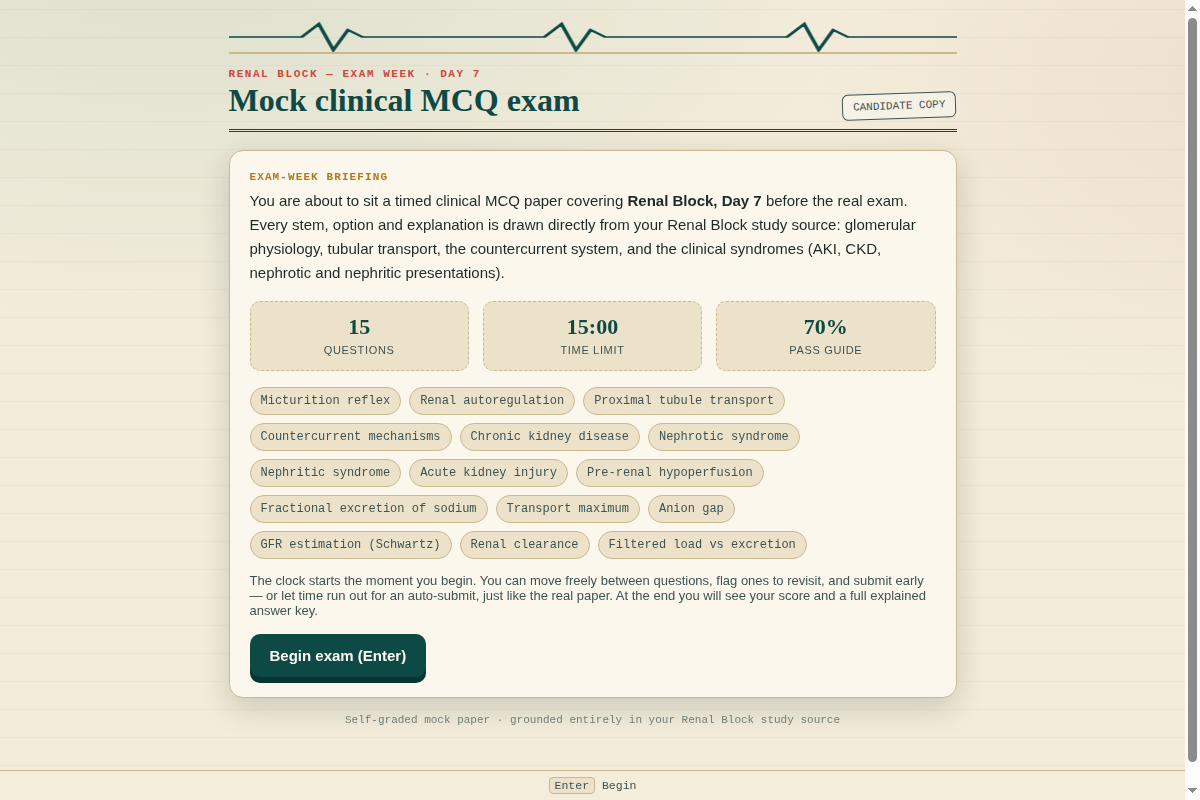
Renal — Day 7: Mock clinical MCQ examby Boitsheko MyatazaSCDM3000A Renal at Wits features a timed mock clinical MCQ exam with approximately 25 single-best-answer questions aligned to the block's learning objectives, designed to simulate exam conditions and assess readiness.June 2026Made 2 months ago
Renal Block — exam weekby Boitsheko MyatazaA day-by-day exam preparation schedule for SCDM3000A Renal at Wits, covering glomerular and tubular disease, acid-base physiology, electrolyte disturbances, AKI/CKD, clinical integration, and a mock exam. Built for exam week with linked flashcard decks and case-based learning resources.June 2026Made 2 months ago
Explain how renal hemodynamics at the afferent and efferent arterioles are altered during hypoperfusion in pre-renal acute kidney injury. Include the specific pharmacodynamic impacts of non-steroidal anti-inflammatory…
10 marks
State the non-graded consensus criteria used to define acute kidney injury (AKI) and outline the serum creatinine and urine output parameters required to classify a patient into Stage 1 versus Stage 3 AKI according to…
5 questions · 54 marks
Practice Q&A
Tutorial Sheet: Acute Kidney Injury Assessment and Managementby Boitsheko MyatazaSCDM3000A Renal (Wits) Q&A practice questions covering acute kidney injury assessment and management, including pre-renal AKI pathophysiology, diagnostic staging criteria, biochemical differentiation, metabolic complications, and novel biomarkers.June 2026Made 2 months ago
02How do FeNa values differentiate prerenal acute kidney injury (AKI) from acute tubular necrosis (ATN)?
03What are the predominant cations and anions in the intracellular fluid (ICF) versus extracellular fluid (ECF)?
+15 more in the deck
Flashcards
Renal & Electrolyte Disturbancesby Boitsheko MyatazaSCDM3000A Renal flashcard deck covering electrolyte and sodium disturbances including FeNa calculations, SIAD diagnostic criteria, hyponatraemia and hyperkalaemia management, and ion pump physiology for Wits students.June 2026Made 2 months ago
Renal Basic Sciences and Tubular & Glomerular Pathologyby Boitsheko MyatazaSCDM3000A Renal at Wits covers basic renal anatomy, embryology, and glomerular pathology through flashcards on kidney vasculature, tubular structures, and histopathological features of glomerulonephritis, minimal change disease, and nephritic syndrome.June 2026Made 2 months ago
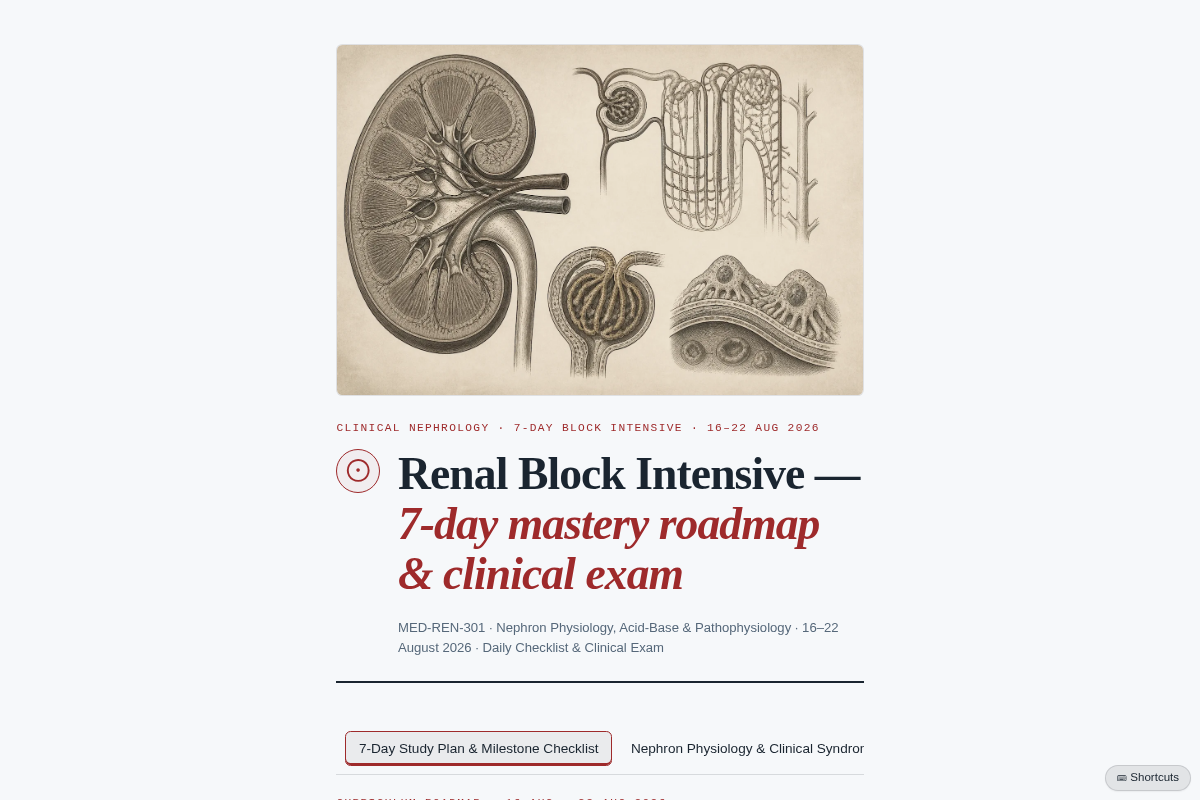
Renal Block 7-Day Study Plan & Clinical MCQ Exam (16–22 Aug 2026)by Boitsheko MyatazaSCDM3000A Renal study guide for Wits provides a structured 7-day plan aligned with pocket book objectives and summaries, complete with daily checklists and a clinical MCQ exam covering material from August 16–22, 2026.June 2026Made 2 months ago
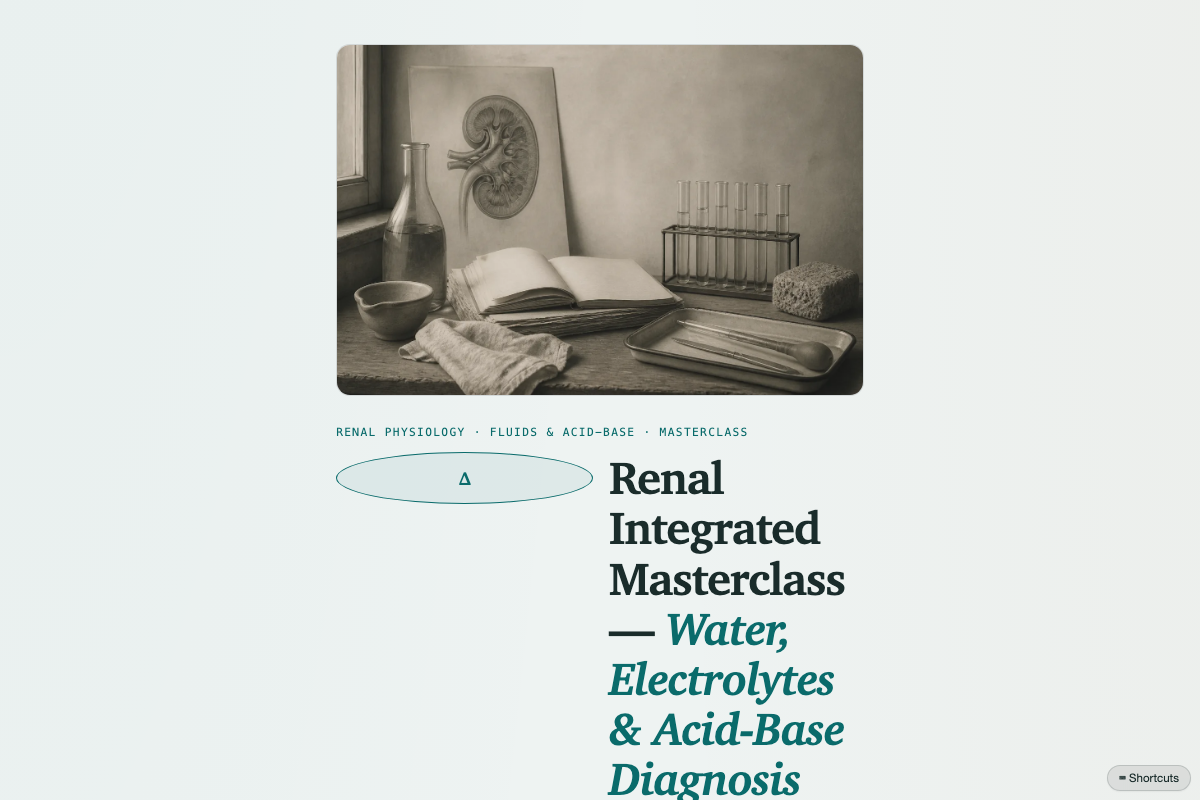
Renal Integrated Masterclass: Water, Electrolytes & Acid-Base Diagnosisby Boitsheko MyatazaSCDM3000A Renal at Wits covers water and electrolyte balance alongside acid-base physiology, integrating clinical presentations like dehydration, vomiting, and diarrhea with diagnostic approaches. This study tool synthesizes the lesson content to teach systematic clinical reasoning for managing patients with combined rJune 2026Made 3 months ago
Renal Block Themes (GEMP 1): CKD in SA, Soobramoney Case & Male Health Quizby Yudarshan PillayThis Wits GEMP 1 Renal Block 3000A quiz covers CKD epidemiology in South Africa, the landmark Soobramoney rationing case, and male health impacts through randomized MCQs with detailed explanations and scoring.2025Made Jun 17, 2026
Renal Pharmacology (GEMP 1): Diuretics, Nephrotoxins & UTI Drugsby Yudarshan PillayWits GEMP 1 Renal 3000A revision tool featuring interactive classification trees for diuretics and nephrotoxic drugs organized by mechanism and site, UTI antibiotic reference tables, renal pharmacokinetics overview, and a 14-question scored self-test.2025Made Jun 17, 2026
Wits GEMP 1 Renal Overview: Acid-Base, AKI & Glomerular Disease Quizby Yudarshan PillayCourse 3000A Renal at Wits covers acid-base interpretation, AKI classification, and glomerular disease differentiation through interactive case-based questions with compensation formulas and clinical reference materials.2025Made Jun 17, 2026
Renal Clinical Sciences: Glomerular Disease Tree (Wits GEMP 1)by Yudarshan PillayThis interactive tree classifies glomerular diseases for Wits 3000A Renal, branching from nephrotic and nephritic syndromes into each condition's biopsy findings, associations, and investigations, with a 10-question self-test included.2025Made Jun 17, 2026